

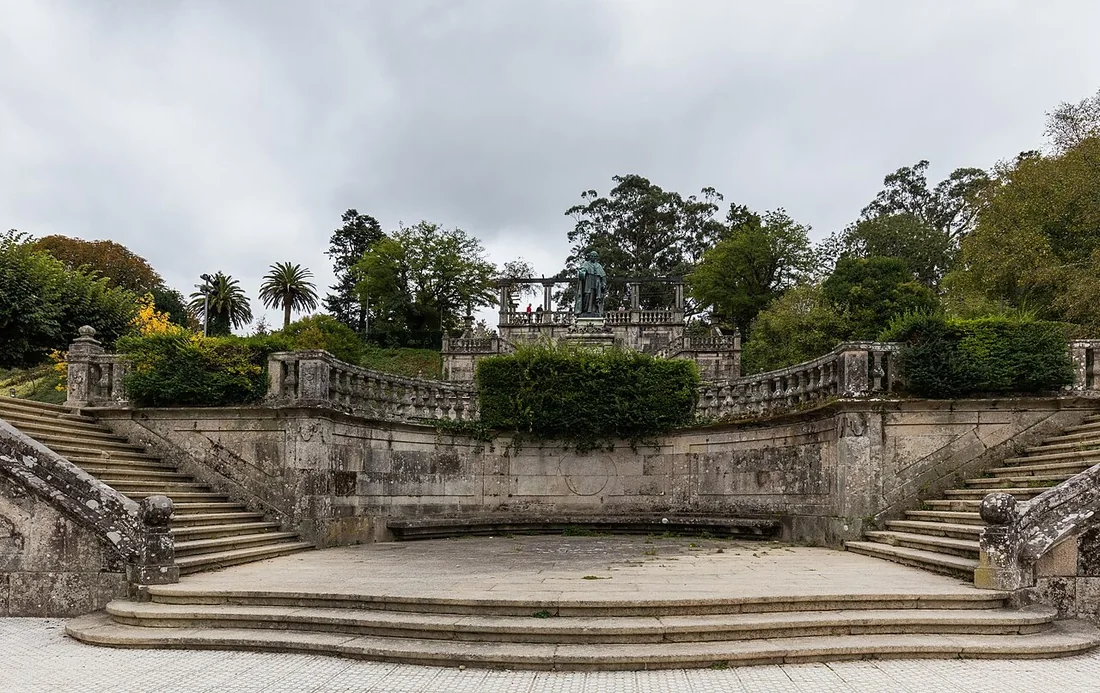
Before entering the maze of stone, go to Alameda. From Paseo da Ferradura you can identify the Cathedral towers, the roofs of the historic quarter and the city’s true scale. It is more than a viewpoint: it is Compostela’s great green sitting room and one of its oldest and best-loved promenades.
What we call Alameda contains three areas: Paseo da Alameda, Carballeira de Santa Susana and Paseo da Ferradura. The oak grove surrounds the chapel of Santa Susana; Ferradura wraps around the hillside and offers several famous views; and the central promenade retains the park’s urban and ceremonial character.
Look for the statues of Maruxa and Coralia Fandiño, known as As Dúas Marías or As Dúas en Punto. Their colourful clothes and daily two-o’clock walk contrasted with the grey Compostela of the dictatorship. The image is cheerful, but their story also speaks of repression, exclusion and everyday resistance; it deserves more than a quick photograph.
Continue towards Paseo dos Leóns and Ferradura. The view changes with the light and rain: at dawn the area is usually calmer, while late-afternoon granite takes on warm tones. When the ground is wet, avoid walking while looking at your phone and watch for leaves, steps and polished surfaces.
Audio guide
Listen to the walk in Spanish as you explore. Pause and continue whenever you like.
Spanish voice · automatic selectionSources used in this chapter
Frequently asked questions
What can I see here?
Before entering the maze of stone, go to Alameda. From Paseo da Ferradura you can identify the Cathedral towers, the roofs of the historic quarter and the city’s true scale. It is more than a viewpoint: it is Compostela’s great green sitting room and one of its oldest and best-loved promenades.
How do I get there?
Parque da Alameda · As Dúas Marías · Paseo da Ferradura. Follow the walking route for this stop
How much time should I allow for the visit?
30–45 min (suggested)
What should I check before I go?
Porta Faxeira · Ferradura